
- Joined
- May 8, 2026
- Messages
- 456
- Thread Author
- #1
It is an excellent question. During the 1850s, both India and Australia were parts of the British Empire, while China was a separate sovereign nation.
Logically, you would think it would be much easier for British subjects from India to move to British Australia than for people from China.
Yet, during the gold rushes, tens of thousands of Chinese arrived, while very few Indians came to dig for gold.
This happened due to three main reasons: the nature of the British contract labor system, the unique financial networks of southern China, and how the British East India Company controlled its population.
1. The "Indentured Labor" Pipeline Kept Indians Elsewhere
The British Empire had a highly structured system for moving Indian workers, but it wasn't designed for free-agent gold hunting.
When Britain abolished slavery in 1833, they needed a massive new source of cheap labor to work sugar, rubber, and tea plantations across the empire. They created the indentured labor system (sometimes called the Girmit system).
The British government and wealthy corporations signed poor Indian laborers to strict, multi-year contracts and shipped them directly to specific colonies:
Where they went: Millions of Indians were sent to Fiji, Mauritius, South Africa, the Caribbean (Trinidad and Guyana), and Malaysia.
The destination trap: These workers did not choose their destination based on where wealth was being found (like the Australian goldfields); they went wherever British corporate masters deployed them to do heavy agricultural work.
2. Southern China Had a Unique "Credit-Ticket" System
Unlike India, where migration was heavily controlled by British authorities, southern China (specifically Guangdong province) had a highly sophisticated, independent capitalist system run by clan organizations and merchant guilds.
The Credit-Ticket System: Chinese laborers didn't need to rely on Western companies to travel. A local Chinese merchant or family clan would buy the migrant a ticket to Melbourne or Sydney on credit.
The Deal: In exchange, the migrant agreed to pay back the cost of the ticket plus interest out of the gold they found.
The Network: This created a highly efficient, privately funded pipeline. Once a few men from a village succeeded in Ballarat or Bendigo, they sent money back, and the merchant guilds funded hundreds more from the exact same district.
India simply did not have this specific type of private merchant network operating independently of British imperial controls at the time.
3. The East India Company Actively Discouraged Free Migration
During the early years of the Australian gold rushes, India was still governed by the British East India Company (before the British Crown took direct control in 1858).
The Company viewed India as a highly regulated economic engine.
They wanted to keep a tight lid on the population to maintain agricultural production, collect taxes, and recruit soldiers for the army. They actively discouraged ordinary Indians from packing up and leaving on independent, speculative journeys across the ocean unless it was part of an officially sanctioned imperial labor contract.
Did Indians Come to Australia at All?
While they didn't come as gold miners, Indians did come to Australia during the 19th century, but they filled entirely different economic niches based on what the Australian colonies needed most:
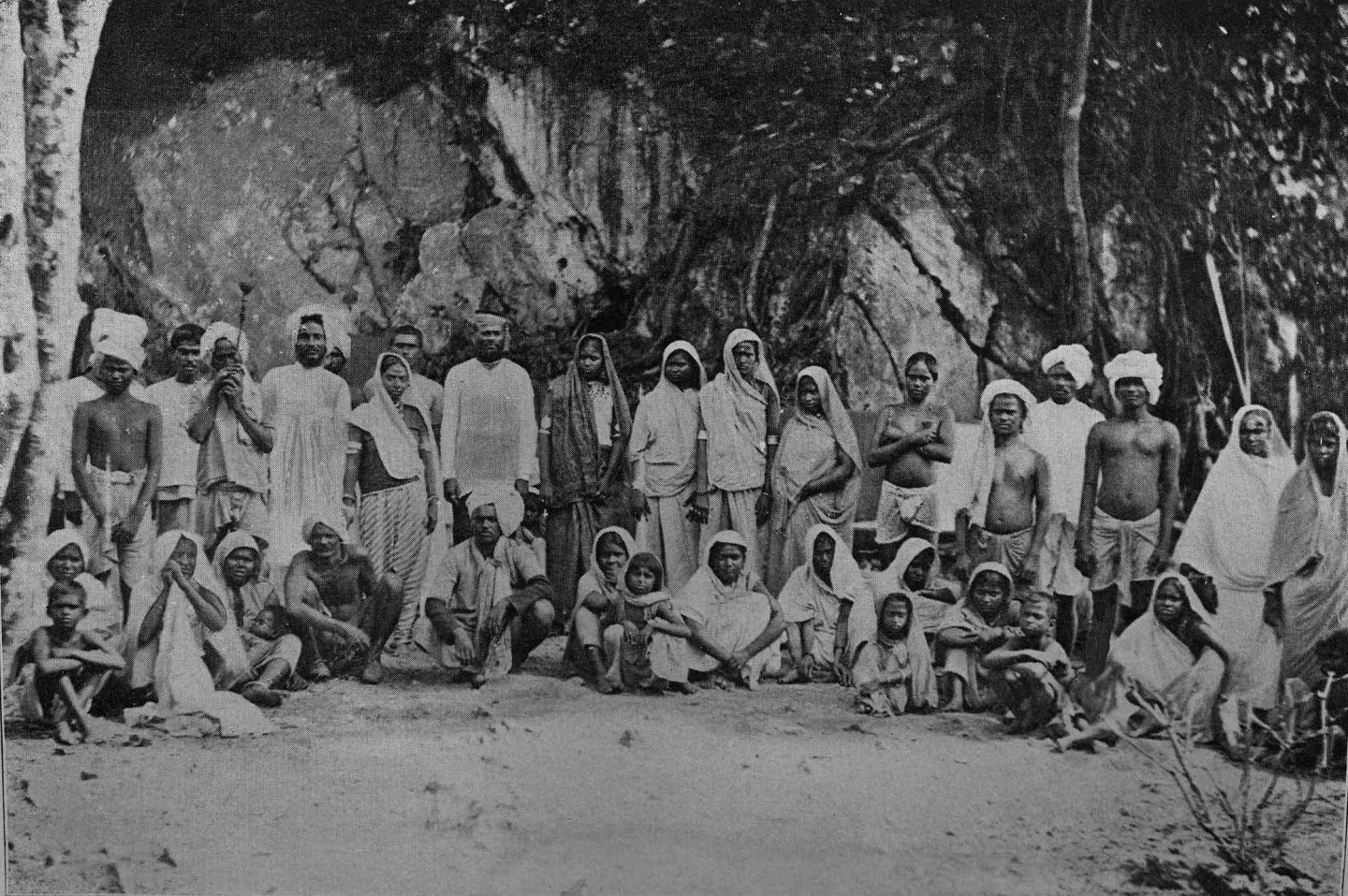
While they didn't come as gold miners, Indians did come to Australia during the 19th century, but they filled entirely different economic niches based on what the Australian colonies needed most:
Agricultural and Pastoral Labor: In the 1840s, before the gold rush, wealthy Australian landowners imported a few thousand Indian laborers to work as shepherds and farmhands because convict labor was drying up.
The "Ghans" (Camel Drivers): To map and open up the harsh, arid Australian outback, the colonies imported camels and handlers. While collectively called "Afghans," a huge portion of these came from the Punjab, Balochistan, and what is now Pakistan/India.
Country Hawkers: By the late 1800s, many Indian migrants (particularly Punjabi Sikhs) became traveling merchants or hawkers, driving wagons packed with clothes, tools, and household goods to remote, rural Australian towns that didn't have stores.
Ultimately, China had the private financial systems to send independent fortune-seekers to the goldfields, while India's population movements were strictly micromanaged by the British Empire to fuel its global plantations.
Logically, you would think it would be much easier for British subjects from India to move to British Australia than for people from China.
Yet, during the gold rushes, tens of thousands of Chinese arrived, while very few Indians came to dig for gold.
This happened due to three main reasons: the nature of the British contract labor system, the unique financial networks of southern China, and how the British East India Company controlled its population.
1. The "Indentured Labor" Pipeline Kept Indians Elsewhere
The British Empire had a highly structured system for moving Indian workers, but it wasn't designed for free-agent gold hunting.
When Britain abolished slavery in 1833, they needed a massive new source of cheap labor to work sugar, rubber, and tea plantations across the empire. They created the indentured labor system (sometimes called the Girmit system).
The British government and wealthy corporations signed poor Indian laborers to strict, multi-year contracts and shipped them directly to specific colonies:
Where they went: Millions of Indians were sent to Fiji, Mauritius, South Africa, the Caribbean (Trinidad and Guyana), and Malaysia.
The destination trap: These workers did not choose their destination based on where wealth was being found (like the Australian goldfields); they went wherever British corporate masters deployed them to do heavy agricultural work.
2. Southern China Had a Unique "Credit-Ticket" System
Unlike India, where migration was heavily controlled by British authorities, southern China (specifically Guangdong province) had a highly sophisticated, independent capitalist system run by clan organizations and merchant guilds.
The Credit-Ticket System: Chinese laborers didn't need to rely on Western companies to travel. A local Chinese merchant or family clan would buy the migrant a ticket to Melbourne or Sydney on credit.
The Deal: In exchange, the migrant agreed to pay back the cost of the ticket plus interest out of the gold they found.
The Network: This created a highly efficient, privately funded pipeline. Once a few men from a village succeeded in Ballarat or Bendigo, they sent money back, and the merchant guilds funded hundreds more from the exact same district.
India simply did not have this specific type of private merchant network operating independently of British imperial controls at the time.
3. The East India Company Actively Discouraged Free Migration
During the early years of the Australian gold rushes, India was still governed by the British East India Company (before the British Crown took direct control in 1858).
The Company viewed India as a highly regulated economic engine.
They wanted to keep a tight lid on the population to maintain agricultural production, collect taxes, and recruit soldiers for the army. They actively discouraged ordinary Indians from packing up and leaving on independent, speculative journeys across the ocean unless it was part of an officially sanctioned imperial labor contract.
Did Indians Come to Australia at All?
While they didn't come as gold miners, Indians did come to Australia during the 19th century, but they filled entirely different economic niches based on what the Australian colonies needed most:
Did Indians Come to Australia at All?
While they didn't come as gold miners, Indians did come to Australia during the 19th century, but they filled entirely different economic niches based on what the Australian colonies needed most:
Agricultural and Pastoral Labor: In the 1840s, before the gold rush, wealthy Australian landowners imported a few thousand Indian laborers to work as shepherds and farmhands because convict labor was drying up.
The "Ghans" (Camel Drivers): To map and open up the harsh, arid Australian outback, the colonies imported camels and handlers. While collectively called "Afghans," a huge portion of these came from the Punjab, Balochistan, and what is now Pakistan/India.
Country Hawkers: By the late 1800s, many Indian migrants (particularly Punjabi Sikhs) became traveling merchants or hawkers, driving wagons packed with clothes, tools, and household goods to remote, rural Australian towns that didn't have stores.
Ultimately, China had the private financial systems to send independent fortune-seekers to the goldfields, while India's population movements were strictly micromanaged by the British Empire to fuel its global plantations.